

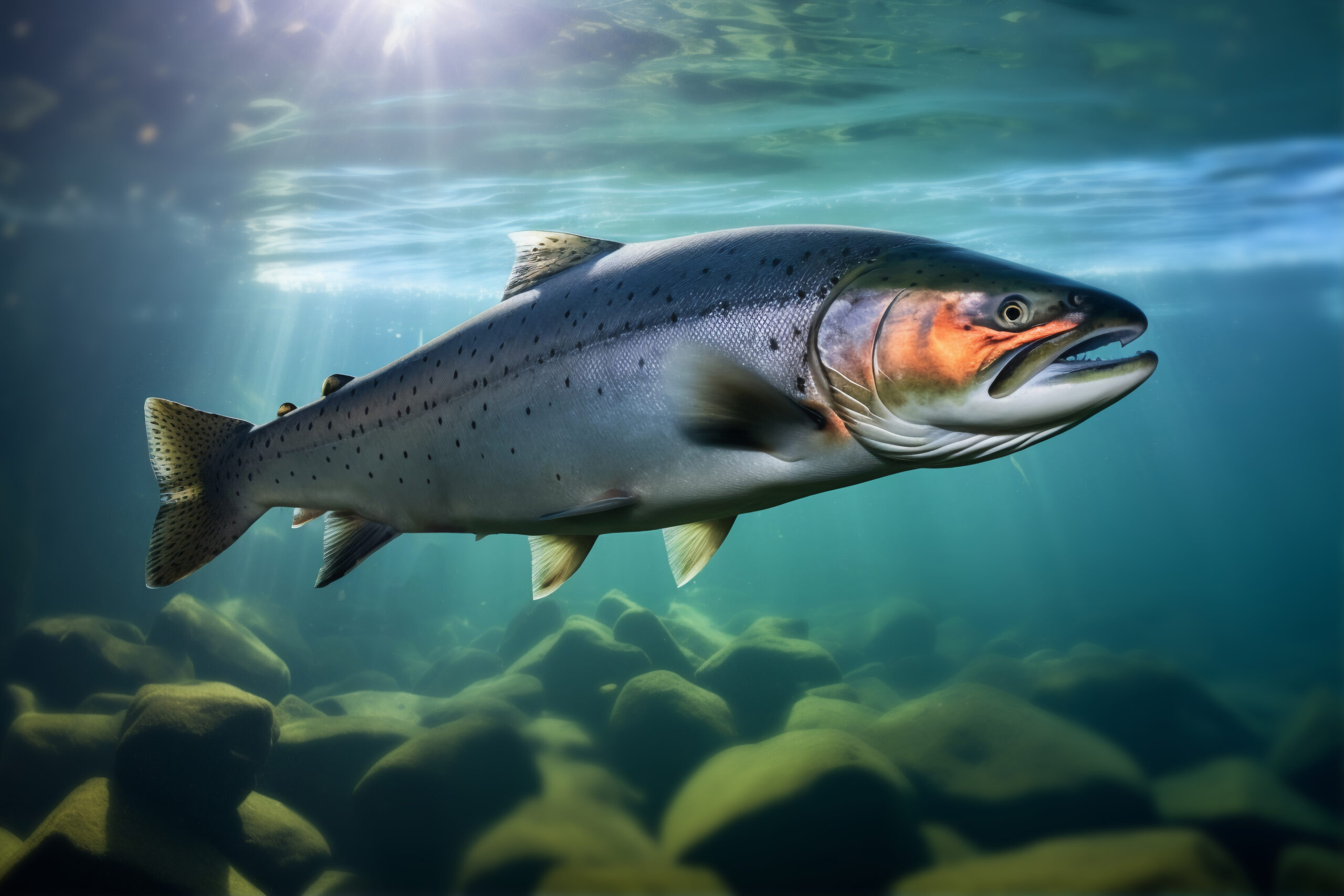
The most extravagant and ecologically significant ichthyofauna in the North Pacific is held by the Alaskan seiti, commonly known in English as Alaska pollock. Its semi-pelagic life form is seen in the formation of large schools which cut across the middle water layers and therefore show remarkable flexibility to the fluid environmental conditions that prevail in cold and northern marine environments. The geographic range of the species, combined with the central position in the troic structure of the ocean, makes alaskan seiti an ideal target of interdisciplinary research in ecology as well as fisheries management.
A North Pacific Semi-pelagic Schooling Fish.
The most dominant characteristic among the salient characteristics of the alaskan seiti is its diffuse nature over the North Pacific Ocean. As the fish is spread across the vast marine areas in the North, it is concentrated in the eastern Bering Sea. Here, huge concentrations co-exist in complex, near-orchestrated filaments, feeding, migrating, and breeding with a high level of synchrony. It is a semi-pelagic approach that provides the fish with the depth range between the mid water layers to the warmer sanctuaries depending on the changes of the seasons, prey distribution and thermal levels.
The locomotor adaptability of the species is part of its continued existence in a geographical grid of strong currents, icy climatic and quickly shifting ecological patches. Through concentration in large schools, alaskan seiti makes its defense against predators more effective, and also it makes foraging more effective in nutrient-rich pelagic habitats.
Surviving in Low-Temperature Water.
Alaskan seiti proves to be a sophisticated acclimatization to cold water environments. The species prefers the deep and cold water grounds in which the thermal and food are always plentiful. It is an epitomical cold-water predator (kylmässa vedessä viihtyva petokala), which remains mostly upon small fishes, krill and other crustacean lineages. Not only does this heterogeneous diet ensure its categorical imperative in the marine food web, but it also adds to its eminence in the global seafood market, where its palatability in a mild way and its flexibility as a flesh, are extremely sought-after qualities.
It is an amazing fish that has behavioral plasticity that is produced by seasonal dynamics. In the antecedent period of the spawning chronology, spring, the Alaskan seiti moves to the shallower levels to obtain mating partners. These regular migrations ensure successful breeding and a safe environment to the future generations. A progressive dispersal of eggs and larvae across the pertinent nursery areas in the North Pacific basin is helped by the subsequent pelagic diadromy of eggs and larvae, which in turn is facilitated by oceanic currents.
The Bering Sea: Ecological Significance.
The largest concentrations of alaskan seiti are found in the eastern Bering Sea and so the area has become a vital point of intersection of biodiversity and commercial extraction. In such an environment, the species is an essential source of prey to marine mammals, avian predators, and piscivorous constituents. At the same time its predations provide control over the populations of subordinate organisms thereby maintaining the ecological balance.
Therefore, the health of alaskan seiti cohort is commonly understood as a sign of the marine ecosystem well-being. Its abundance, migration and reproduction are stringently observed by scientists as sustainable fisheries governance has taken center stage in the changing thermal regimes and new environmental perturbations that can threaten the integrity of habitat and long-term stock resilience.
Economic and Culinary Value.
Alaskan seiti is of great economic significance at the international level in addition to its ecological significance. It is one of the most widely fished fish stocks across the world and it has offered commodities of surimi, fillets and frozen portions to the major seafood markets. Its savory-sweet taste and firm, but fragile, texture make it a popular ingredient in both everyday culinary customs and high-level, global cuisine, including both basic fish consommés and elaborate and complicated cuisine.
Commercial fisheries on Bering Sea have strict sustainability measures that would ensure alaskan seiti harvest activities are carried out with responsible environmental management. The species is never ceasingly highlighted by sponsorships of various sustainable seafood certifying organizations which serve to underline it as an exemplary paradigm of innovative fishery management.
Sustainability and Future Prospective.
With the changing environment of the marine beats still a current under the impact of climatic variability and anthropogenic forces, the future of the alaskan seiti is dependent on vigilant management. Despite the resistance displayed by the species, continued vigilance on the species through monitoring and use of sound, science-based management practices are necessary. Climate change can initiate changes in thermal regime, prey distribution, and migration patterns, creating new problems of scientific investigation and fishery management.
Luckily, the species has been maintained in a somewhat stable condition as a result of the sustained research and evidence-based governance. The currently strong sense of sustainability highlights the long term presence of alaskan seiti as a key species in the marine habitats of the north and as a dependable source of various human communities in the world.
Conclusion
The alaskan seiti survives as one of the most captivating marine life in the North Pacific – a semi-pelagic schooling fish that is able to not only live in cold water, but also shows strong predatory efficiency and contributes to ecological integrity and the world food supply. It can be illustrated by the vast flocks in the eastern Bering Sea to its migrations and its vital aspect in marine trophic webs, this spectacular fish is illustrative of the interrelationship of life in the sea.
In the event that sustainable fisheries is upheld and the environment is favourable, the alaskan seiti can continue to be one of the most indispensable and captivating species in the ocean.

